Measured Biology
The Measured Biology of Spirit Poria
Wolfiporia extensa
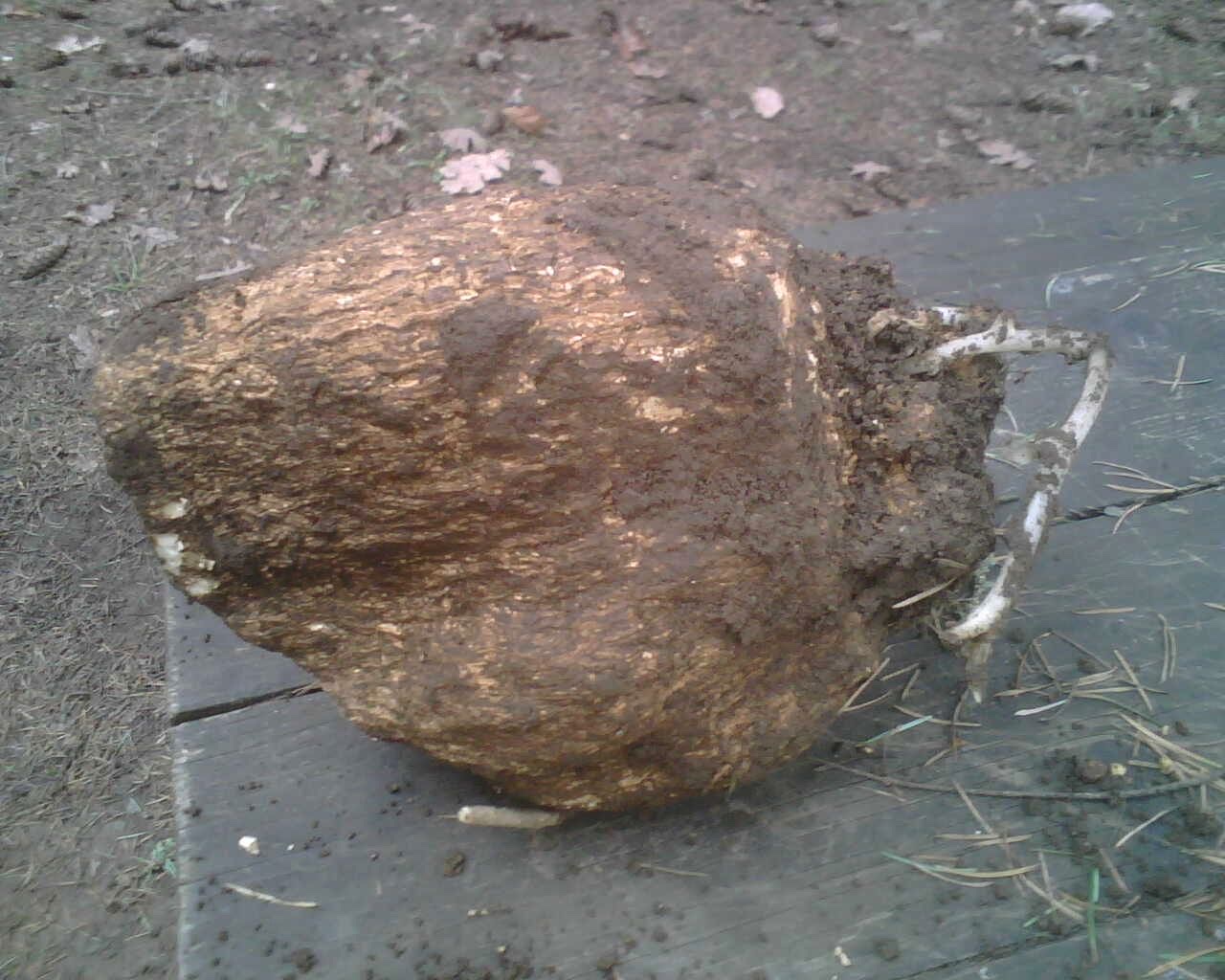
Spirit Poria (Wolfiporia extensa, known in older literature as Poria cocos and in the East Asian materia medica as Fu Ling) is not a root in the botanical sense but a sclerotium — a dense, compacted body of fungal tissue that forms underground on the roots of pine. It is, properly, a medicinal mushroom in its most concentrated form: where the visible mushroom is fleeting, the sclerotium is the organism's reserve, a slow-grown vault of stored substance. The name we carry it under, 茯神 (Fu Shen, "spirit poria"), refers specifically to the portion of the sclerotium that grows clasped around the pine's heart-root — the part the classical tradition reserved for the mind and the settled spirit, distinct from the outer flesh used for fluid work. Native to the pine forests of China, Korea, and Japan, it has been a cornerstone of the East Asian apothecary for two millennia, prized precisely because it is neutral, quiet, and broadly compatible — a harmonizing botanical of unusually gentle character. In our cabinet, Spirit Poria sits among the clarity botanicals: a neutral-flavored, deeply grounding presence whose character is calm rather than stimulating. It does not push or drive; it settles. This is the herb of the steadied mind and the unhurried system — a botanical that anchors rather than excites, supporting a calm, settled clarity and the body's own rhythm of restful, uninterrupted ease. It is one of the gentlest, most broadly tolerated members of the entire medicinal-mushroom lineage, which is why the tradition reached for it constantly, in formula after formula, as the quiet center that lets companion herbs work without disturbing the ground beneath them.
In the body
Spirit Poria engages the body across three quiet, interlocking systems — the nervous system, the body's natural fluid and digestive balance, and the immune system's own intelligence — and it does so through two well-established compound classes carried in the sclerotium: triterpenes and polysaccharides. The triterpenes (the lanostane-type acids that give Poria its identity in the fungal materia medica) are the constituents the tradition associated with its settling, anchoring character — the calm, grounded clarity for which we place it among the clarity botanicals, and its long classical use in support of the body's own healthy fluid balance. The polysaccharides — chiefly the beta-glucans that are the signature of every true medicinal mushroom — are the substrate the body's immune system is built to recognize. Rather than forcing anything, beta-glucans present the immune system with the molecular pattern it evolved to read, nourishing its natural function and its own balanced, self-regulating tone. In practice this makes Spirit Poria a botanical of grounded equilibrium. It nourishes the nervous system toward a calm, settled clarity and supports the body's natural rhythm of restful ease — the steadied mind rather than the sedated one. Through its triterpene fraction it supports normal fluid balance and a comfortable, well-toned digestion, supporting the housekeeping the body performs for itself. Through its beta-glucan polysaccharides it nourishes the immune system's own intelligence and supports a balanced response to everyday stress. It is, throughout, a structure-supporting tonic: it works with the body's existing systems and feeds their innate capacity to find their own balance, which is exactly the gentleness that earned it its central place in the tradition.
The molecules, measured
The active compounds in Spirit Poria, the proteins each is measured to engage, and — where a real, exact-match assay exists — the strength of that binding.
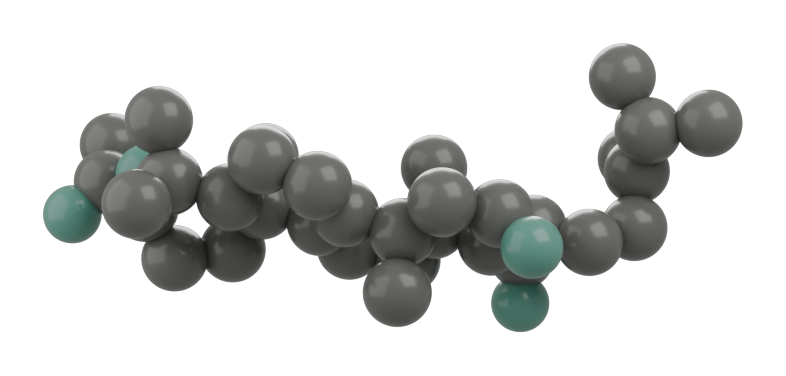
Pachymic acid
PubChem ↗Measured to act on
Acidic phospholipase A2 2
An enzyme that releases fatty acids from cell membranes, starting inflammation-signaling cascades.
The classical record
What tradition carried
Spirit Poria is one of the most extensively recorded botanicals in the classical East Asian materia medica, where it appears as Fu Ling (茯苓) for its broad harmonizing and fluid-balancing use and, in the specific spirit-root portion we carry, as Fu Shen (茯神) — the form the tradition reserved for the calm, settled mind. It is a foundational ingredient of the canonical formula tradition, anchoring such classical preparations as Wu Ling San, where it served as the neutral, harmonizing center that steadied and balanced the more active herbs around it. Across the East Asian apothecary lineage of China, Korea, and Japan, it has been valued for two thousand years precisely for its neutrality and gentleness — a food-grade fungus given freely in tonics for the settled spirit, comfortable digestion, and the body's own healthy fluid balance. It is this recorded lineage of the harmonizing, grounding sclerotium — not modern invention — that GGG NATURAL carries forward.