Measured Biology
The Measured Biology of Tulsi (Holy Basil)
Ocimum sanctum
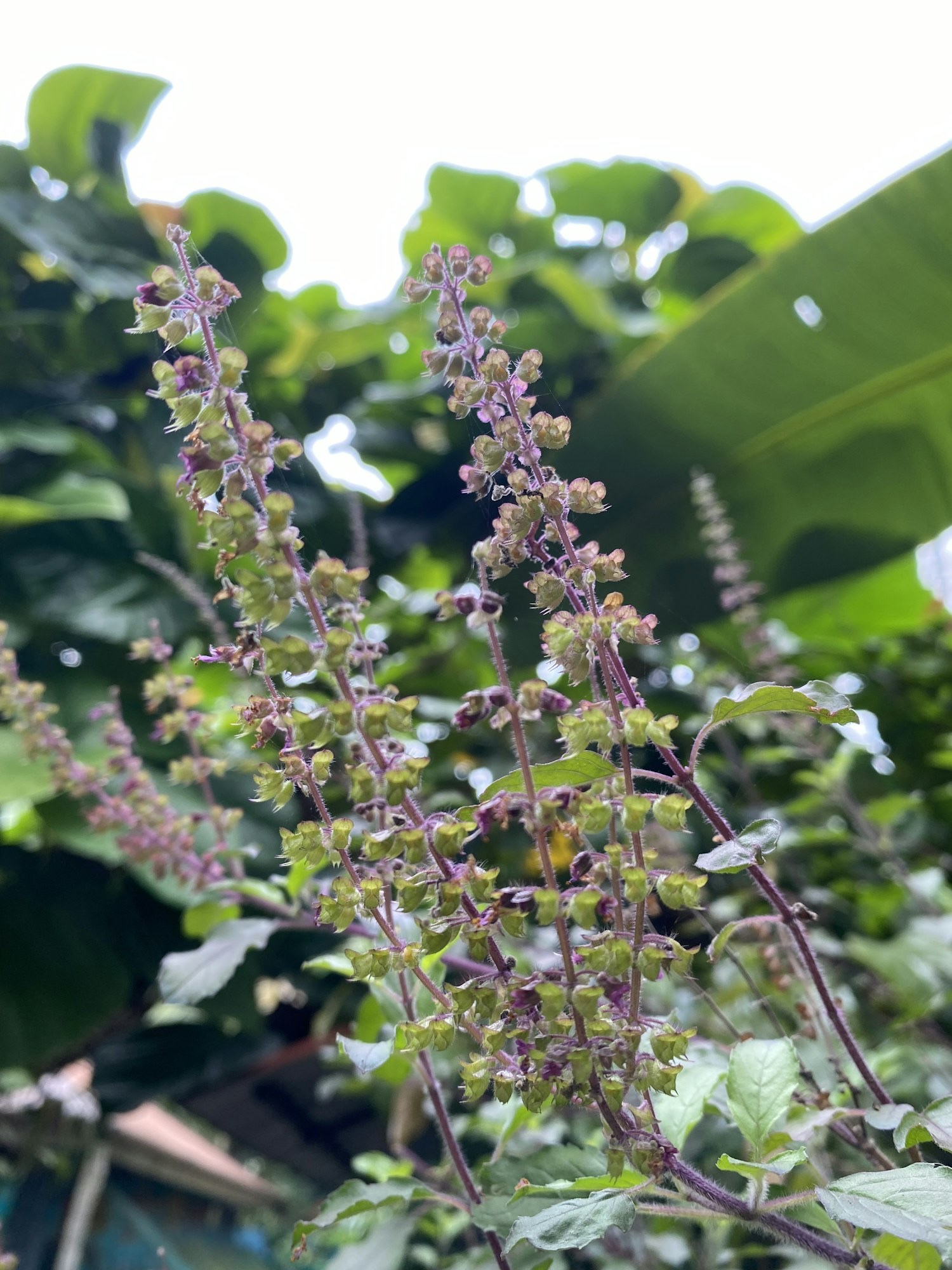
Tulsi — Ocimum sanctum, the Holy Basil — is one of the most venerated plants of the Indian subcontinent, an upright, aromatic member of the mint family whose leaves carry a warm, clove-like pungency the moment they are bruised. In the Ayurvedic lineage it is not classed as a common culinary basil but as a rasayana — a tonic herb, a restorer, the plant Sanskrit names "the incomparable one." GGG NATURAL works it as a green: the leaf, gently dried and rendered as a dilute hot-water extract or raw powder rather than the concentrated aromatic oil, so the plant arrives as a daily tonic rather than a sharp distillate. This is the form that keeps Tulsi's character intact — bright, spicy, grounding — while keeping the volatile-phenol load gentle enough for a tonic taken every day. Tulsi's nature is that of an adaptogen in the truest sense: a plant the body recognizes as a steadying influence, one that meets the wear of a demanding day not by sedating and not by stimulating, but by helping the body hold its own equilibrium. Its character is warming and clarifying — energy without agitation, calm without dullness. In the apothecary it sits at the meeting point of vitality and composure, a green that supports stamina and endurance on one side and a grounded, clear-headed steadiness on the other.
In the body
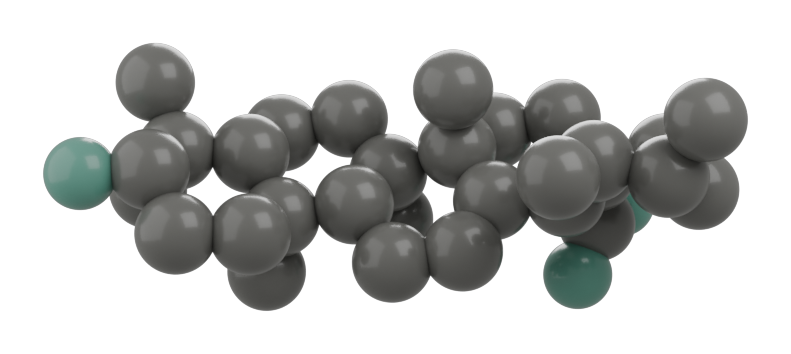
Tulsi is associated above all with the immune system — nourishing the immune system's own natural function and the equilibrium it maintains — and with the body's natural stress response, the axis along which energy, focus, and composure are held. As an adaptogenic tonic it nourishes stamina and endurance while supporting the steady, grounded calm that lets clarity emerge; it also tones the respiratory passages, supporting the easy, open breathing that the herbal tradition has long associated with this leaf. These are structure-and-function relationships: Tulsi feeds the systems that govern vigor and resilience, so the body can keep itself in balance. The established chemistry behind this character is led by two compound classes. The leaf is rich in eugenol, the warm phenolic that gives Holy Basil its clove-like aroma and anchors its volatile-oil fraction. Alongside it runs ursolic acid, a pentacyclic triterpene found in the leaf wax — the same triterpene class that gives many tonic botanicals their toning, structurally supportive character. Tulsi also carries other aromatic phenylpropanoids and rosmarinic-acid-type polyphenols typical of the mint family, a polyphenol profile the body engages as part of its own resilience and oxidative-balance machinery. In GGG's dilute aqueous form, the phenolic load stays measured: enough to carry Tulsi's grounding, clarifying signature, gentle enough to support the body's systems day after day rather than overwhelm them.
The molecules, measured
The active compounds in Tulsi (Holy Basil), the proteins each is measured to engage, and — where a real, exact-match assay exists — the strength of that binding.
apigenin
PubChem ↗Measured to act on
Cytochrome P450 1B1
A liver-family enzyme that processes hormones and foreign compounds the body needs to clear.
Transthyretin
A carrier protein that ferries thyroid hormone and vitamin A through the bloodstream.
Cytochrome P450 1A1
A detoxifying enzyme that breaks down environmental compounds the body absorbs.
Casein kinase II subunit alpha
A widely active enzyme that tags other proteins to regulate cell growth and signaling.
Xanthine dehydrogenase/oxidase
The enzyme that produces uric acid as the body breaks down purines from food and cells.
Pyruvate kinase PKM
A key enzyme in how cells extract energy from sugar.
luteolin
PubChem ↗Measured to act on
Cytochrome P450 1B1
A liver-family enzyme that processes hormones and foreign compounds the body needs to clear.
Macrophage metalloelastase
An enzyme immune cells use to remodel and break down connective tissue.
Receptor-type tyrosine-protein kinase FLT3
A receptor on blood-forming cells that signals them to grow and divide.
NADPH oxidase 4
An enzyme that produces reactive oxygen molecules used in cell signaling.
Cytochrome P450 1A1
A detoxifying enzyme that breaks down environmental compounds the body absorbs.
Xanthine dehydrogenase/oxidase
The enzyme that produces uric acid as the body breaks down purines from food and cells.
ursolic acid
PubChem ↗Measured to act on
Nuclear receptor ROR-gamma
A receptor inside cells that helps direct immune cell development and daily body rhythms.
Sentrin-specific protease 1
An enzyme that fine-tunes other proteins by removing small regulatory tags.
Transcription factor p65
A master switch protein that turns on genes for immune and inflammatory responses.
Liver carboxylesterase 1
A liver enzyme that breaks down many compounds and helps process fats.
rosmarinic acid
PubChem ↗Measured to act on
Ectonucleotide pyrophosphatase/phosphodiesterase family member 1
An enzyme involved in mineral balance and how cells respond to insulin signaling.
Alpha-synuclein
A small brain protein involved in how nerve cells release their chemical messengers.
The classical record
What tradition carried
Tulsi's recorded lineage runs through Ayurveda, where Ocimum sanctum is honored as a rasayana — a rejuvenating tonic herb — and held as sacred across the households and temple courtyards of India for thousands of years, cultivated as much for daily devotion as for daily use. The classical Indian materia medica positions it as a warming, clarifying tonic for vitality, composure, and open breathing, and it carries equally into the folk and equine traditions as an adaptogenic tonic for steadiness under stress. GGG NATURAL carries this lineage forward in the spirit it was given: Tulsi as a daily green that nourishes the body's own capacity for balance, taken not against any one thing but as a steadying companion to vigor and calm.