green
Tulsi (Holy Basil)
Ocimum sanctum
Also known as
Suitable For
Holy Basil — an Ayurvedic adaptogen rich in eugenol and ursolic acid. Supports stress resilience, immune function, and clear, easy breathing.
What it nourishes in the body
The body systems this herb is traditionally understood to support — resolved through our knowledge graph, where the classical record and modern biology are read together. Structure and function, never a claim of treatment.
Where measure and tradition agree
Tulsi (Holy Basil) is measured to engage these systems in human binding data — and the recorded tradition named it for them independently. Two evidence systems arriving at the same place, separately, is our highest standard. See the research →
Engages the body’s own cannabinoid system
Tulsi (Holy Basil) is measured to engage the endocannabinoid system — the master regulator the body runs on its own cannabinoids, carrying β-caryophyllene, a dietary terpene that engages the CB2 receptor. Characterization, not a clinical claim. The endocannabinoid bridge →
Raw, Unconcentrated Powder
Whole-plant. Small-batch. Potent.
How to take it
1 tsp in hot water, tea, or a smoothie, once daily.
Whole plant, never isolated
Concentrated extracts of the whole botanical — the way the body recognizes it.
Cited to measured biology
Every action we describe traces to the compound and its measured target.
Structure & function
We describe what an herb nourishes — never a claim to treat disease.
Secure checkout
Encrypted payment and human verification on every order.
The Botanical
Tulsi (Holy Basil), in depth
Character
Tulsi — Ocimum sanctum, the Holy Basil — is one of the most venerated plants of the Indian subcontinent, an upright, aromatic member of the mint family whose leaves carry a warm, clove-like pungency the moment they are bruised. In the Ayurvedic lineage it is not classed as a common culinary basil but as a rasayana — a tonic herb, a restorer, the plant Sanskrit names "the incomparable one." GGG NATURAL works it as a green: the leaf, gently dried and rendered as a dilute hot-water extract or raw powder rather than the concentrated aromatic oil, so the plant arrives as a daily tonic rather than a sharp distillate. This is the form that keeps Tulsi's character intact — bright, spicy, grounding — while keeping the volatile-phenol load gentle enough for a tonic taken every day.
Tulsi's nature is that of an adaptogen in the truest sense: a plant the body recognizes as a steadying influence, one that meets the wear of a demanding day not by sedating and not by stimulating, but by helping the body hold its own equilibrium. Its character is warming and clarifying — energy without agitation, calm without dullness. In the apothecary it sits at the meeting point of vitality and composure, a green that supports stamina and endurance on one side and a grounded, clear-headed steadiness on the other.
In the Body
Tulsi is associated above all with the immune system — nourishing the immune system's own natural function and the equilibrium it maintains — and with the body's natural stress response, the axis along which energy, focus, and composure are held. As an adaptogenic tonic it nourishes stamina and endurance while supporting the steady, grounded calm that lets clarity emerge; it also tones the respiratory passages, supporting the easy, open breathing that the herbal tradition has long associated with this leaf. These are structure-and-function relationships: Tulsi feeds the systems that govern vigor and resilience, so the body can keep itself in balance.
The established chemistry behind this character is led by two compound classes. The leaf is rich in eugenol, the warm phenolic that gives Holy Basil its clove-like aroma and anchors its volatile-oil fraction. Alongside it runs ursolic acid, a pentacyclic triterpene found in the leaf wax — the same triterpene class that gives many tonic botanicals their toning, structurally supportive character. Tulsi also carries other aromatic phenylpropanoids and rosmarinic-acid-type polyphenols typical of the mint family, a polyphenol profile the body engages as part of its own resilience and oxidative-balance machinery. In GGG's dilute aqueous form, the phenolic load stays measured: enough to carry Tulsi's grounding, clarifying signature, gentle enough to support the body's systems day after day rather than overwhelm them.
The Tradition
Tulsi's recorded lineage runs through Ayurveda, where Ocimum sanctum is honored as a rasayana — a rejuvenating tonic herb — and held as sacred across the households and temple courtyards of India for thousands of years, cultivated as much for daily devotion as for daily use. The classical Indian materia medica positions it as a warming, clarifying tonic for vitality, composure, and open breathing, and it carries equally into the folk and equine traditions as an adaptogenic tonic for steadiness under stress. GGG NATURAL carries this lineage forward in the spirit it was given: Tulsi as a daily green that nourishes the body's own capacity for balance, taken not against any one thing but as a steadying companion to vigor and calm.
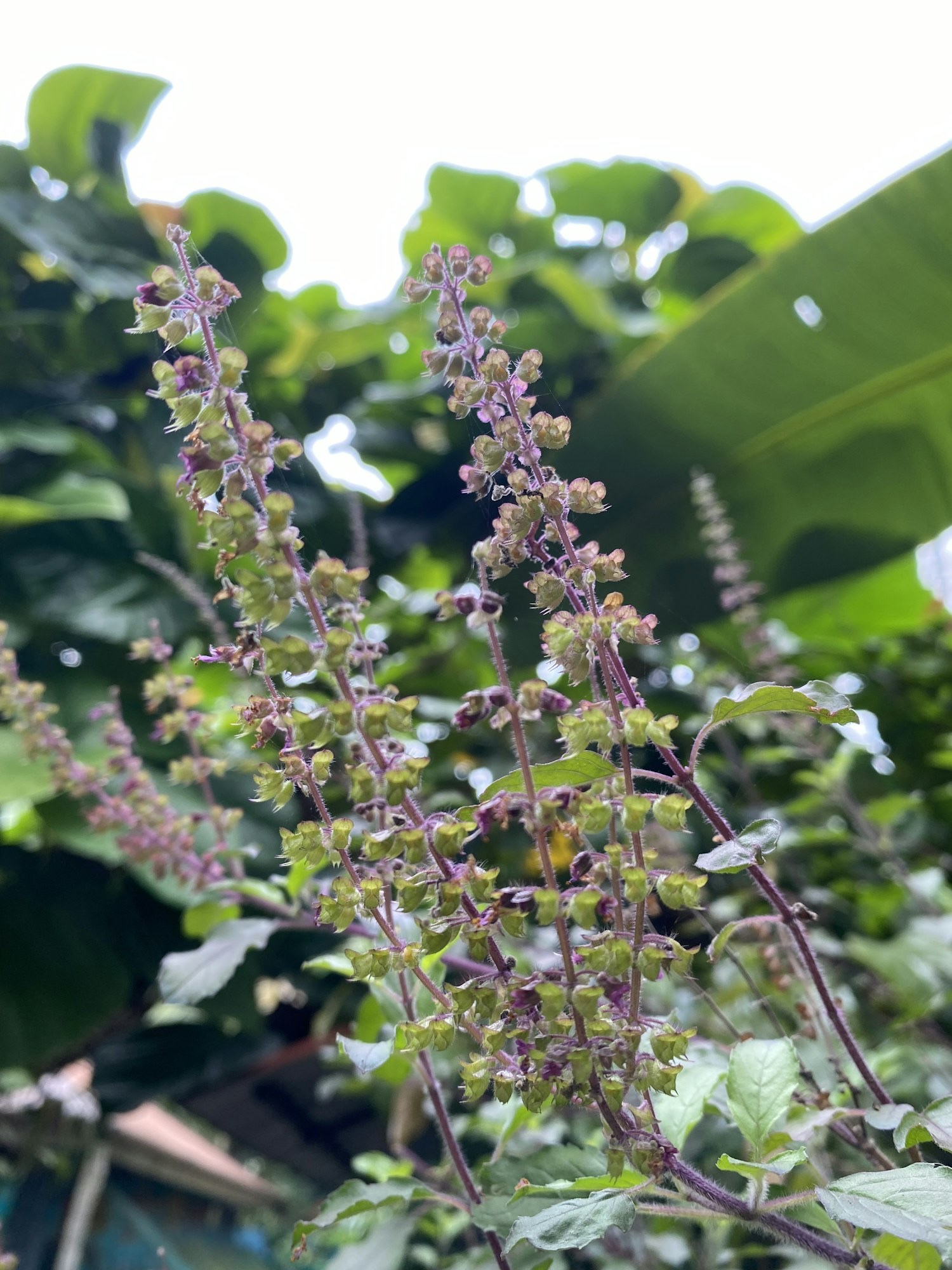
The leaf
Tulsi (Holy Basil),
as it actually grows.
Ocimum sanctum — holy basil, tulsi, the sacred plant kept by Indian doorways and steeped daily as the queen of herbs.
How to Use
Across the Three Kingdoms
One herb, prepared once, serving people, pets, and plants from a single botanical practice — each with its own measure and care.
People
Benefit
natural energy, stamina, and endurance — plus immune support
How to Use
1 tsp in hot water, tea, or a smoothie, once daily.
Pets
Dogs & companion animals
Benefit
Adaptogenic tonic herb that supports a calm stress response, healthy GI and respiratory comfort, and normal immune balance.
How to Use
Add a small amount of the dilute extract or powder to food, scaled to body weight (a pinch for cats/small birds, more for dogs and horses); start low and build over several days.
By Animal
Cats
Non-toxic Ocimum per ASPCA; dilute water extract avoids the eugenol/phenolic load that would otherwise concern cats' limited glucuronidation.
Dogs
Non-toxic to dogs (ASPCA); well-tolerated adaptogenic tonic in moderate amounts.
Horses
Traditional equine adaptogen tonic, well tolerated; no iodine/glycyrrhizin/saponin load in a dilute Tulsi extract.
Birds
Dilute aqueous extract is fine; only the concentrated aromatic essential oil (high eugenol) would pose a respiratory/volatile-oil risk to birds.
⚑ Sport horses: Holy Basil is not a specifically named FEI/USEF Prohibited Substance, but botanical tonics carry unquantified actives (and Tulsi has mild CNS/sedative and metabolic effects) that could trigger a controlled-medication finding; withdraw before competition and clear with your team vet under the FEI Clean Sport / USEF GR4 framework.
Safety
GGG's product is a DILUTE hot-water extract/powder, not the essential oil — the concentrated Holy Basil oil is up to ~85% eugenol/phenolics and would warrant real caution in cats and birds, but a dilute aqueous tonic at moderate dose carries minimal volatile phenols and is well tolerated. Conditional caveats (all here, not in the per-species class): Tulsi can have mild antiplatelet/blood-thinning activity — pause use ~1-2 weeks before any surgery and use caution with anticoagulant or antiplatelet drugs; it has demonstrated blood-glucose-lowering effects, so monitor diabetic animals on insulin/hypoglycemics for additive effect; the plant's estragole content can stimulate uterine contractions, so avoid in pregnant animals, and some data suggest anti-fertility effects so avoid in breeding stock; use caution layered with sedatives or in animals with significant liver or kidney disease, and discontinue if any GI upset appears. Always start low, dilute well, and consult your veterinarian for animals on medication or with chronic disease.
Source: ASPCA Toxic and Non-Toxic Plants — Basil/Ocimum (Non-Toxic to Dogs and Cats), https://www.aspca.org/pet-care/aspca-poison-control/toxic-and-non-toxic-plants/basil; BioStar US, "Tulsi (Holy Basil): Adaptogen Benefits for Horses & Dogs," https://blog.biostarus.com/tulsi-the-incomparable-one/; Arabian Journal of Chemistry / ScienceDirect review of Holy Basil essential-oil phytochemistry & toxicity (eugenol/estragole), https://www.sciencedirect.com/science/article/pii/S1878535223003325; FEI Equine Prohibited Substances List (fei.org) and USEF GR4 Drugs & Medications Rules (usef.org).
Plants
Garden, soil & foliage
Benefit
vegetative vigor, strong rooting, and resilient new growth
How to Use
Dilute 1/8 to 1/4 teaspoon per gallon of water. Foliar feed at the lighter rate, or soil drench at the fuller rate, about once a month or every other feeding. Best worked in through vegetative growth, as the plant builds leaf, stem, and root.
Best for
Vegetative growthSafety
A dilute extract in the GGG Plants line; always dilute and start light.
Source: GGG Plants line formulation
Structure-and-function guidance for nutrition and vitality. Not intended to diagnose, treat, cure, or prevent any disease. Introduce one botanical at a time and notice how the body responds. Some plants interact with medication; if you are pregnant, nursing, or on a prescription, know the interaction before you begin.
What's inside
Tulsi (Holy Basil),
down to the molecule.
The signature compound of Tulsi (Holy Basil), rendered from its real structure in bronze and glass — the precise thing the plant carries, given the dignity it has earned.
The evidence chain
From the plant to the molecule to the body — traced.
Not a claim — a chain. Every link below traces to a primary record. This is what Tulsi (Holy Basil) is, measured.
The plant
Tulsi (Holy Basil)
which governs
A liver-family enzyme that helps the body break down compounds, including hormones and environmental substances.
serving the system
Immune · Liver
and the tradition independently agrees — measured binding
The recorded herbal lineage names Tulsi (Holy Basil) a immune and nervous and respiratory herb. Independently, its compounds are measured to bind proteins of those systems. Tradition and molecule, arrived at separately, converge — the strongest evidence we hold.
Structure and function only. The chain describes the plant’s characterized chemistry and traditional use — not a claim to treat, cure, or prevent any disease.
How it works
How Tulsi (Holy Basil) works in the body
A herb is never one thing — it is a community of compounds, each meeting the body in its own way. These are the active molecules in Tulsi (Holy Basil) and the proteins each one is measured to engage: the precise points where the plant meets your biology. So you see not just that it works, but how.
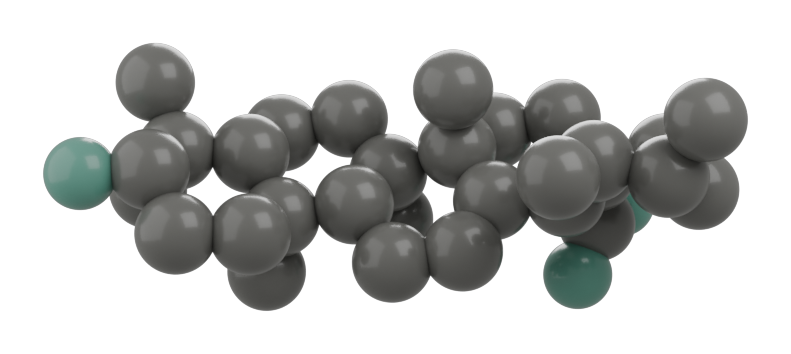
apigenin
PubChem ↗Measured to act on
A liver-family enzyme that processes hormones and foreign compounds the body needs to clear.
A carrier protein that ferries thyroid hormone and vitamin A through the bloodstream.
Concentrated in choroid plexusstructure resolved ↗
A detoxifying enzyme that breaks down environmental compounds the body absorbs.
Concentrated in liver, urinary bladderstructure resolved ↗
A widely active enzyme that tags other proteins to regulate cell growth and signaling.
The enzyme that produces uric acid as the body breaks down purines from food and cells.
Concentrated in liver, intestine, breaststructure resolved ↗
A key enzyme in how cells extract energy from sugar.
Concentrated in skeletal muscle, tonguestructure resolved ↗
Measured in the lab
Real measurements from binding studies. A tighter fit means the compound meets its target more readily — the figure in grey is the actual measured value.
Binds very tightly to Acetylcholinesterase · IC50 12 nM
Binds very tightly to Cytochrome P450 1B1 · IC50 25 nM
Binds tightly to Estrogen receptor beta · IC50 130 nM
Binds tightly to Dipeptidyl peptidase 4 · IC50 140 nM
Binds tightly to Transthyretin · Kd 250 nM
Binds tightly to MAP kinase-interacting serine/threonine-protein kinase 2 · IC50 308 nM
— and 46 more measured targets, each traced to its source.
luteolin
PubChem ↗Measured to act on
A liver-family enzyme that processes hormones and foreign compounds the body needs to clear.
An enzyme immune cells use to remodel and break down connective tissue.
Concentrated in lymphoid tissue, urinary bladder, intestinestructure resolved ↗
A receptor on blood-forming cells that signals them to grow and divide.
Concentrated in brain, lymphoid tissue, bone marrowstructure resolved ↗
An enzyme that produces reactive oxygen molecules used in cell signaling.
Concentrated in kidney, blood vesselstructure resolved ↗
A detoxifying enzyme that breaks down environmental compounds the body absorbs.
Concentrated in liver, urinary bladderstructure resolved ↗
The enzyme that produces uric acid as the body breaks down purines from food and cells.
Concentrated in liver, intestine, breaststructure resolved ↗
Measured in the lab
Real measurements from binding studies. A tighter fit means the compound meets its target more readily — the figure in grey is the actual measured value.
Binds very tightly to Tyrosinase · IC50 0.613 nM
Binds very tightly to Carbonic anhydrase 7 · Ki 4.7 nM
Binds very tightly to Cytochrome P450 1B1 · Ki 56 nM
Binds very tightly to Carbonic anhydrase 12 · Ki 60 nM
Binds very tightly to Transthyretin · Kd 70 nM
Binds tightly to Dipeptidyl peptidase 4 · IC50 120 nM
— and 65 more measured targets, each traced to its source.
ursolic acid
PubChem ↗Measured to act on
A receptor inside cells that helps direct immune cell development and daily body rhythms.
Concentrated in skeletal musclestructure resolved ↗
An enzyme that fine-tunes other proteins by removing small regulatory tags.
Concentrated in testis, salivary glandstructure resolved ↗
A master switch protein that turns on genes for immune and inflammatory responses.
A liver enzyme that breaks down many compounds and helps process fats.
Concentrated in liverstructure resolved ↗
Measured in the lab
Real measurements from binding studies. A tighter fit means the compound meets its target more readily — the figure in grey is the actual measured value.
Binds very tightly to Steryl-sulfatase · IC50 0.06 nM
Binds very tightly to Nuclear receptor ROR-gamma · IC50 0.75 nM
Binds very tightly to Sentrin-specific protease 1 · IC50 6.4 nM
Binds very tightly to Transcription factor p65 · IC50 31 nM
Binds very tightly to Liver carboxylesterase 1 · IC50 100 nM
Binds tightly to Neutrophil elastase · IC50 416 nM
— and 15 more measured targets, each traced to its source.
rosmarinic acid
PubChem ↗Measured to act on
An enzyme involved in mineral balance and how cells respond to insulin signaling.
Concentrated in placentastructure resolved ↗
A small brain protein involved in how nerve cells release their chemical messengers.
Concentrated in brain, bone marrowstructure resolved ↗
Measured in the lab
Real measurements from binding studies. A tighter fit means the compound meets its target more readily — the figure in grey is the actual measured value.
Binds very tightly to Ectonucleotide pyrophosphatase/phosphodiesterase family member 1 · Ki 27 nM
Binds tightly to Alpha-synuclein · IC50 210 nM
Binds tightly to Integrase · IC50 550 nM
Binds to Tyrosine-protein kinase Fyn · IC50 1.3 µM
Binds to Induced myeloid leukemia cell differentiation protein Mcl-1 · IC50 2.026 µM
Binds to 17-beta-hydroxysteroid dehydrogenase type 2 · IC50 3.72 µM
— and 3 more measured targets, each traced to its source.
Cited science · not claims
Everything we publish about these plants traces to a primary source — the compounds to PubChem, ChEMBL, and BindingDB, the traditional uses to named, dated herbals. We describe what a plant is and what it is understood to nourish — the body’s own systems, structure and function only. We do not claim it treats, cures, or prevents any disease, and nothing here is a substitute for professional care. See our method & sources →
These statements have not been evaluated by the Food and Drug Administration. Not intended to diagnose, treat, cure, or prevent any disease.
Works alongside
Other herbs that share Tulsi (Holy Basil)'s terrain
Different plants reaching the same systems of the body — the convergence our genome engine maps. These nourish the terrain Tulsi (Holy Basil) supports: