For Pets
Calm
For the animal who startles at thunder, paces before the car ride, or simply lives a little too keyed-up — a daily measure of grounded calm, fed gently into the systems that govern composure.
Some animals carry their nervous system close to the surface. The dog who trembles and hides at the first roll of thunder. The cat who flattens and stops eating the moment the carrier comes out. The young, bright, high-strung companion who never quite settles — pacing, panting, watching the door, unable to switch off even when nothing is wrong. Zen is for that animal. It is a calming, food-grade tonic built to support an even, settled disposition: the kind of grounded composure that lets a body stay present through a storm, a journey, a houseful of guests, or simply an ordinarily over-wired day.
What you are reaching for here is not sedation. A sedated animal is dulled, heavy, switched off — that is not what this is and not what the herbal tradition has ever offered. Zen works the other way around. It nourishes the systems the body itself uses to find steadiness, so that calm arises from within rather than being imposed from outside. The animal stays itself — alert, aware, fully present — but with the volume of its own alarm turned down to something it can live inside. That distinction is the whole point. We are feeding composure, not erasing the animal.
Reach for it in the predictable moments that undo a sensitive animal: the season of summer storms, the long car ride or the trip to a new place, the fireworks evening, the crate, the boarding stay, the new baby or new pet in the house. And reach for it, too, for the animal whose baseline is simply nervous — the constitutionally high-strung disposition that has nothing to do with any single event and everything to do with how that particular creature is wired. Given daily as a quiet measure mixed into food, Zen is meant to build a steadier floor under that animal over time, not just paper over one bad afternoon.
It is gentle enough to live alongside. These are nourishing tonic foods, scaled to body weight and begun at the smallest sensible dose, suitable for dogs and cats and — at properly scaled measure — other companion animals. It asks nothing dramatic of the body. It simply gives the nervous system, the heart, and the body's stress-response machinery the kind of botanical nourishment they recognize and know how to use.
The characterized botanicals inside
Whole botanicals with compounds characterized in the scientific literature, used across centuries of traditional practice. We share the chemistry and the tradition — food and lineage, never a claim to treat any condition.
For Pets
Small-batch. Dual-extracted where it matters. Made by hand.
How to take it
Wellness dose by body weight — begin with the minimum: ~1/8 tsp at 10 lbs · ~1/4 tsp at 20–30 lbs · ~1/2 tsp at 40–50 lbs, daily or as needed, mixed into food.
Whole plant, never isolated
Concentrated extracts of the whole botanical — the way the body recognizes it.
Cited to measured biology
Every action we describe traces to the compound and its measured target.
Structure & function
We describe what an herb nourishes — never a claim to treat disease.
Secure checkout
Encrypted payment and human verification on every order.
- Free shipping over $150USPS Priority, tracked. $15 standard; ships in 1–3 business days.
- 30-day returnsIn original packaging and resalable condition. Refunded to your original payment method.
What you get
What this formula gives you
Supports a calm, settled disposition in animals who run high-strung or anxious by nature
Helps a sensitive companion stay grounded through predictable stressors — storms, fireworks, travel, vet visits, boarding, household upheaval
Feeds the body's own stress-response systems so composure builds from within, without dulling or sedating the animal
Longan aril and lion's mane — the sweet, grounding botanicals the tradition kept at the center of a calm, even-tempered bowl
Gentle, food-grade, body-weight-scaled tonic suitable for daily steadying use over time
Supports clarity and a quiet, focused calm rather than agitation, thanks to the lion's mane and dendrobium in the blend
How it works
The science of Calm
Not buzzwords — the actual chemistry of the plants in this formula: their characterized compounds and the proteins those compounds are measured to engage, every one cited.
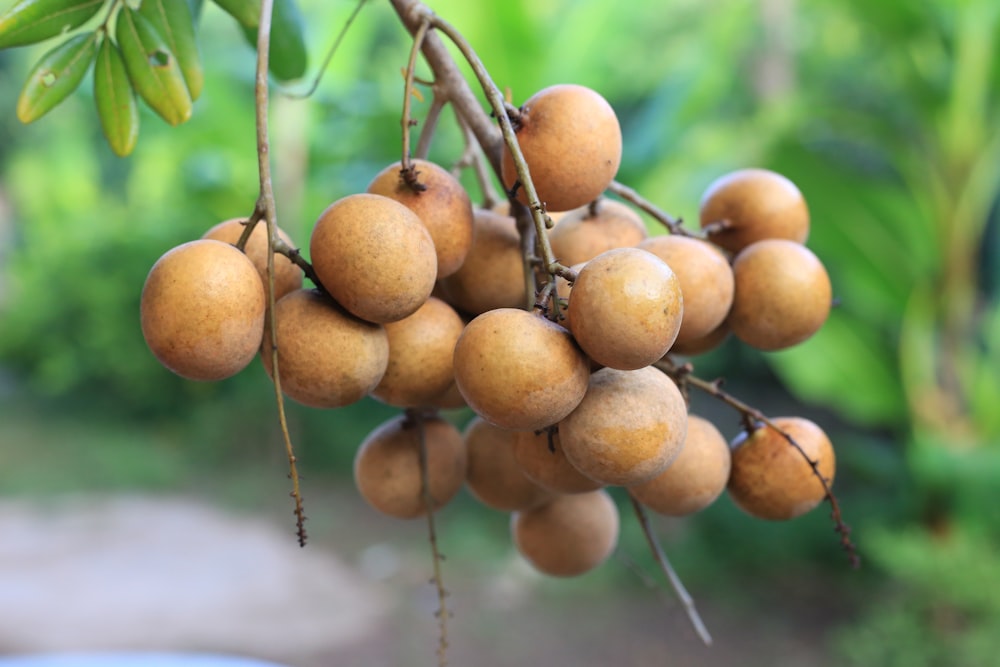
Composure is not one organ's job — it is a conversation between several systems, and Zen is composed to feed each side of that conversation rather than to override any of it. The blend's center of gravity is longan (Dimocarpus longan), the honey-sweet dragon-eye fruit that the herbal lineage has reached for across southern China and Southeast Asia precisely as a sweet, grounding daily fruit. We use only the aril — the flesh, never the seed or shell — concentrated as a 10:1 extract. Its naturally rich polyphenol fraction (gallic acid, ellagic acid, quercetin, and related flavonoids confirmed against PubChem and ChEMBL records) places longan among the body's recognized dietary antioxidants, the class that supports an animal's own systems for managing everyday oxidative load. In the apothecary's reading it is a sweet, grounding fruit the tradition has long linked to a calm, even baseline. It is the warm, sweet, steadying note the whole formula is built around — the base that grounds the more active herbs and that makes the experience one of settled steadiness rather than a jolt.
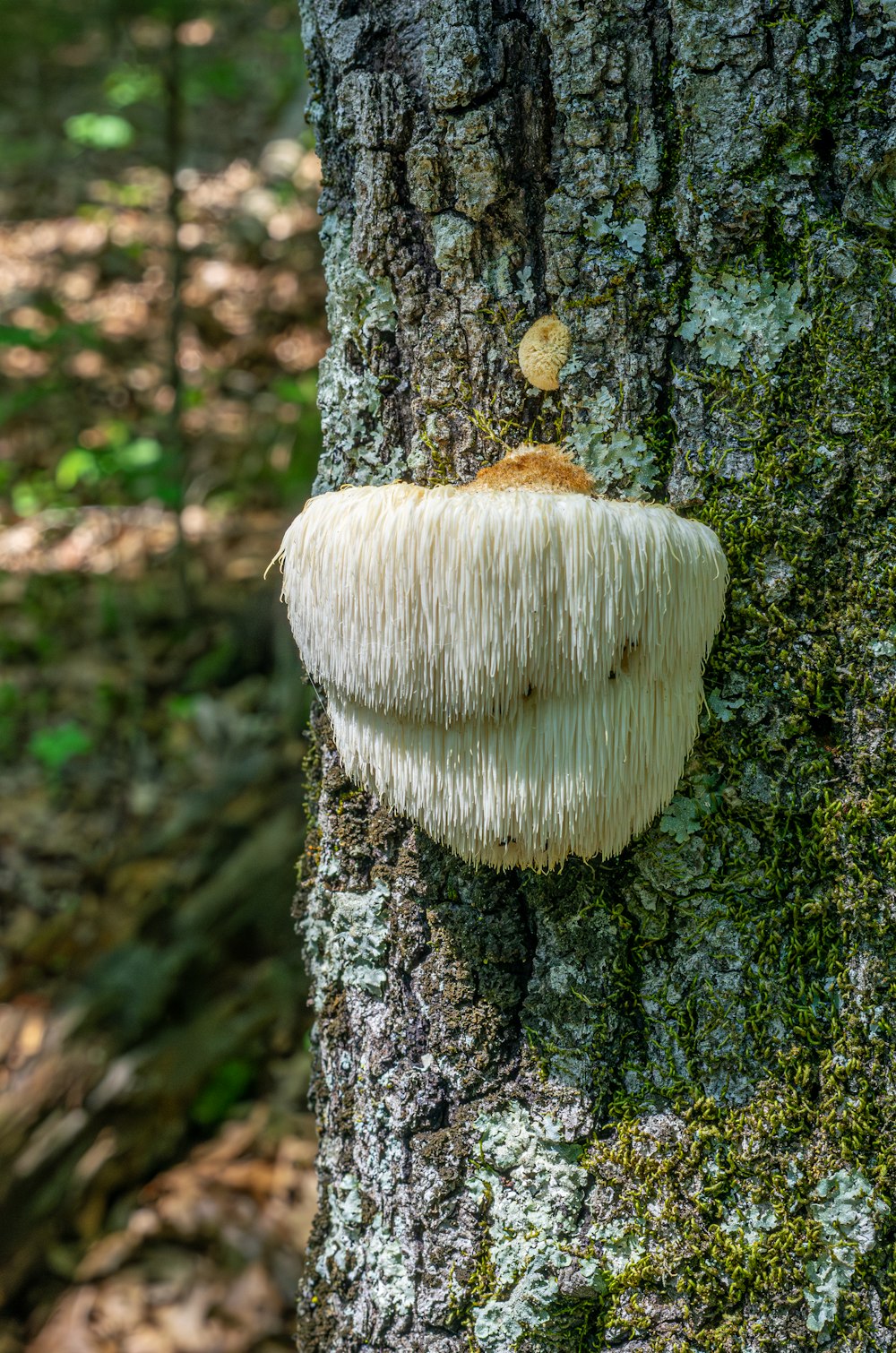
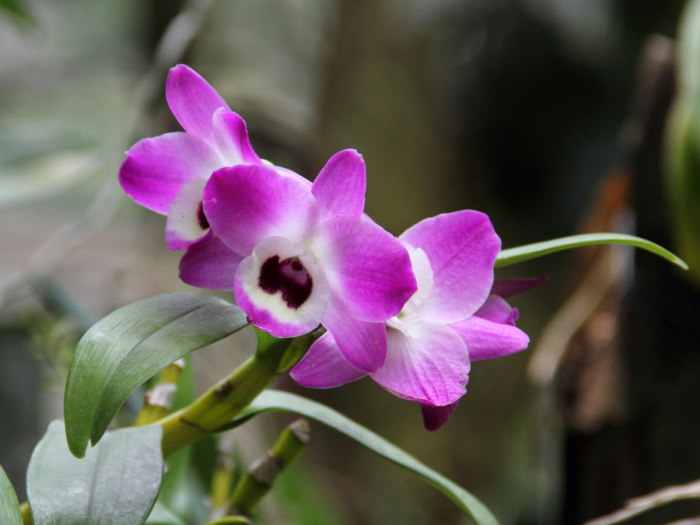
Around that steadying center sit the herbs the tradition kept for calm and clarity. Lion's Mane (Hericium erinaceus) brings its signature hericenones and erinacines — compound classes verified by name-lookup against PubChem and unique to this mushroom — alongside the beta-glucans that earned it long standing as a tonic mushroom in the old apothecary; in our molecular data and the wider herbal record it sits on the calm-and-clarity side of the ledger rather than the agitation side. Dendrobium (Dendrobium nobile), the prized 'nine immortal herbs' orchid stem, contributes a profoundly moistening, restorative character built on its polysaccharides, and a small bibenzyl fraction — moscatilin and gigantol among them — whose measured molecular targets are telling: gigantol shows binding to calmodulin, the body's master calcium-signaling protein, while moscatilin engages stress-responsive kinases including GSK-3 beta and the JNK and p38 MAP kinase families (all documented in ChEMBL). These are the intracellular pathways through which cells register and modulate stress signals, which is why the tradition reads dendrobium as a balancing, settling tonic rather than a stimulant. It fills and steadies where other herbs push.
The adaptogenic backbone is what keeps that calm from tipping into dullness. Schizandra (Schisandra chinensis), the five-flavor berry, carries its distinctive dibenzocyclooctadiene lignans — schisandrin, schisandrin B, gomisin A and their kin, all confirmed compound identities — the constituents the tradition leaned on to help a body meet demand and return to its baseline without the spike-and-crash of a stimulant. Gynostemma (Gynostemma pentaphyllum), the 'twisting vine' so chemically close to ginseng, supplies gypenosides and ginsenosides (Rb1, Rd and others) whose measured activation of the AMPK energy-sensing complex anchors its long standing as a resilience tonic under load. Together the five do one coherent thing: longan and dendrobium settle and replenish, lion's mane sits on the calm-and-clarity axis, and schizandra and gynostemma keep the body even and supple under demand. Structure and function throughout — Zen offers the constituents the tradition kept for composure, characterized against our molecular data; it makes no claim against any condition.
The molecules, measured
A formula is a community of compounds. Below are active molecules from the herbs in this blend and the proteins each is measured to engage — the precise points where the plants meet biology. So you see not just that it works, but how.
Schisandra chinensis
Schisandrin B (Wuweizisu B)
PubChem ↗Measured in the lab: binds very tightly to Multidrug resistance-associated protein 1 · IC50 1.25 nM
Measured to act on
A guardian enzyme that senses DNA stress and helps coordinate repair.
A sentinel enzyme that detects DNA breaks and signals the cell to mend them.
An enzyme that helps stitch broken DNA strands back together.
Schisandrin C (= Wuweizisu C)
PubChem ↗Measured to act on
The enzyme that drives the body's inflammatory response.
The liver's busiest enzyme for breaking down compounds the body takes in.
A liver enzyme that helps metabolize and clear many compounds from the body.
Dimocarpus longan
Gallic acid
PubChem ↗Measured in the lab: binds very tightly to Amyloid-beta precursor protein · EC50 1.7 nM
Measured to act on
A mitochondrial enzyme involved in breaking down fatty acids and balancing steroid hormones.
An enzyme that adds sugar tags to cells, helping immune cells find their way through tissue.
An enzyme that edits chemical tags on DNA-packaging proteins to regulate genes.
Ellagic acid
PubChem ↗Measured in the lab: binds very tightly to Amyloid-beta precursor protein · EC50 1.7 nM
Measured to act on
A protein that repairs damaged DNA and helps balance the cell's oxidative state.
A constantly active signaling enzyme involved in cell growth and stress responses.
An enzyme in the liver and red blood cells that helps turn sugar into usable energy.
Hericium erinaceus
Ergosterol
PubChem ↗Measured to act on
An enzyme that adjusts protein activity and helps the cell clear damaged material.
A cellular pump that escorts foreign compounds out of cells.
An enzyme immune cells switch on to make nitric oxide, a signaling molecule of the inflammatory response.
Dendrobium nobile
Moscatilin
PubChem ↗Measured to act on
A versatile signaling enzyme involved in energy storage, cell structure, and growth.
A versatile signaling enzyme involved in energy storage, cell structure, and growth.
A signaling enzyme that helps cells respond to stress and coordinate their activity.
Gigantol
PubChem ↗Measured to act on
A small calcium-sensing protein that relays calcium signals throughout the cell.
A small calcium-sensing protein that relays calcium signals throughout the cell.
A central signaling enzyme governing cell growth, survival, and metabolism.
Gynostemma pentaphyllum
Ginsenoside Rb1
PubChem ↗Measured to act on
The cell's energy sensor, balancing fuel use when reserves run low.
Ginsenoside Rd
PubChem ↗Measured to act on
The cell's energy sensor, balancing fuel use when reserves run low.
Cited science · not claims
Everything we publish about these plants traces to a primary source — the compounds to PubChem, ChEMBL, and BindingDB, the traditional uses to named, dated herbals. We describe what a plant is and what it is understood to nourish — the body’s own systems, structure and function only. We do not claim it treats, cures, or prevents any disease, and nothing here is a substitute for professional care. See our method & sources →
These statements have not been evaluated by the Food and Drug Administration. Not intended to diagnose, treat, cure, or prevent any disease.
Why these herbs together
The shared mechanism
More than one botanical in this blend is measured to engage the same molecular targets. We share the convergent chemistry — characterized and cited, never a claim.
Schizandra · Gynostemma
Longan Berry · Gynostemma
Longan Berry · Gynostemma
Longan Berry · Gynostemma
Schizandra · Longan Berry
Each convergence is a gene whose protein two or more of this formula’s herbs are measured to engage (PubChem BioAssay & ChEMBL). It describes characterized molecular activity and the protein’s normal role — structure and function only, never a claim to treat, cure, or prevent any disease.
In practice
Who it’s for, and how to use it
Who it’s for
For the anxious, high-strung, or easily-overwhelmed companion animal — the storm-shy dog, the travel-stressed cat, the young or sensitive pet who never quite winds down. Reach for it ahead of known stressful events (thunderstorm season, fireworks, car trips, vet or grooming visits, boarding, a new home or new family member), or feed it daily as a steadying tonic for an animal whose everyday baseline simply runs too keyed-up. Suitable for dogs and cats, and other companion animals at properly scaled measure. Begin at the smallest dose for the animal's weight and build slowly. As with any new tonic, animals that are pregnant or nursing, or that have an existing health concern or are on medication, should be started only with your veterinarian's guidance.
How to use it
Give as a wellness dose by body weight, mixed into food, beginning with the minimum and adjusting as needed: roughly 1/8 tsp at 10 lbs, 1/4 tsp at 20-30 lbs, and 1/2 tsp at 40-50 lbs, once daily or as needed. For predictable stress (storms, travel, fireworks), it works best fed steadily in the days leading up to the event rather than as a single last-minute dose. Start low, give with a meal, and build gradually — our extracts are potent and a little goes a long way.
Measure · Wellness dose by body weight — begin with the minimum: ~1/8 tsp at 10 lbs · ~1/4 tsp at 20–30 lbs · ~1/2 tsp at 40–50 lbs, daily or as needed, mixed into food.
What’s inside
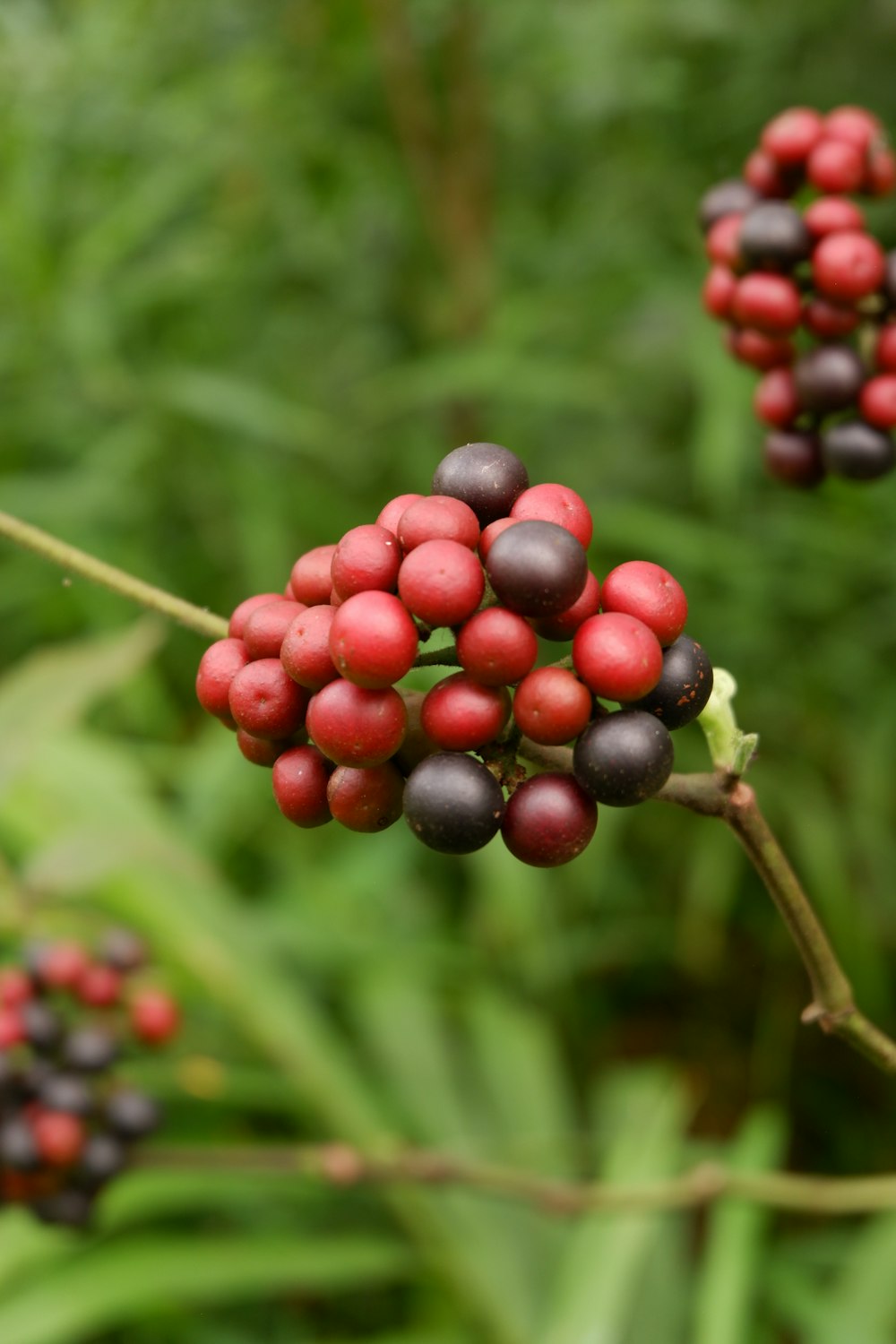
Inside Zen are gentle tonics chosen for how they work together: longan berry, the sweet dragon-eye fruit the tradition set at the center of a calming blend; lion's mane, the bearded mushroom of the old apothecary; dendrobium, the moistening orchid stem that fills and steadies; and schizandra and gynostemma — the five-flavor berry and the twisting vine — the adaptogen pair the lineage kept for an even, unhurried temperament. Each is a food-grade extract, scaled for an animal's body, drawn from one unbroken herbal lineage that has reached for these same calming, nourishing plants across cultures for centuries.
Structure-and-function support for animal nutrition and vitality. Introduce gradually and watch how your companion responds. Not intended to diagnose, treat, cure, or prevent any disease. If your animal is pregnant, nursing, or on medication, consult your veterinarian first.
Pairs well with
Formulas that share Calm's botanicals
Built from overlapping herbs, these reinforce Calm along the same lines — the shared-botanical kinship our genome engine maps.