mineral
Bentonite Clay
Suitable For
A swelling clay formed from aged volcanic ash, carrying an exceptional adsorptive surface charge. It binds compounds through the digestive tract for gentle, thorough clearing.
What it nourishes in the body
The body systems this herb is traditionally understood to support — resolved through our knowledge graph, where the classical record and modern biology are read together. Structure and function, never a claim of treatment.
Whole Herb
Whole-plant. Small-batch. Potent.
How to take it
1/4 to 1/2 tsp stirred into a full glass of water, away from meals and medications, then follow with more water. Not taken with food or other supplements.
Whole plant, never isolated
Concentrated extracts of the whole botanical — the way the body recognizes it.
Cited to measured biology
Every action we describe traces to the compound and its measured target.
Structure & function
We describe what an herb nourishes — never a claim to treat disease.
Secure checkout
Encrypted payment and human verification on every order.
The Mineral
Bentonite Clay, in depth
Character
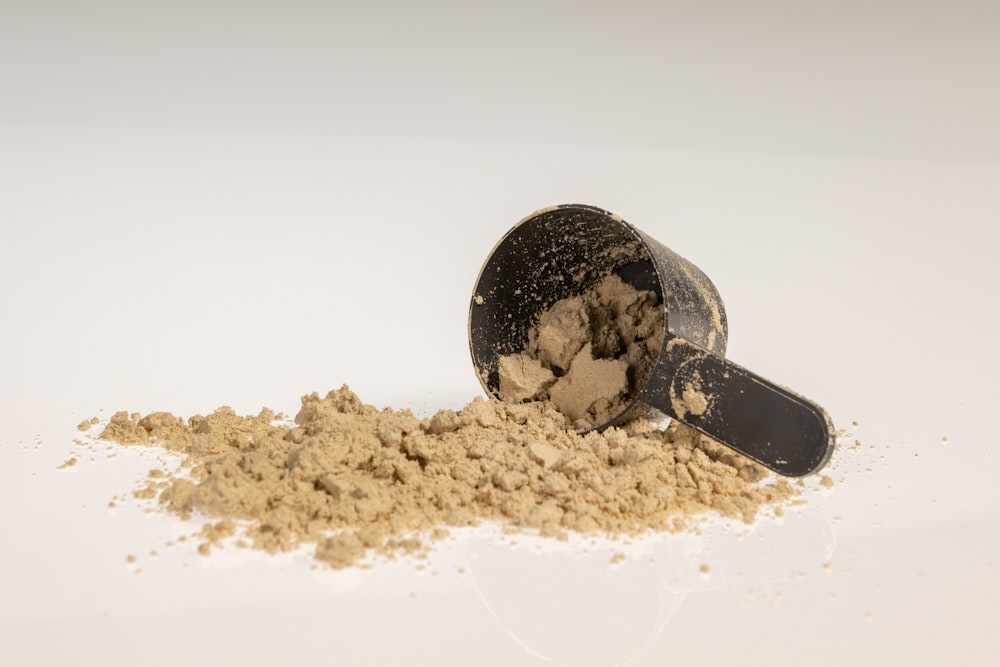
Bentonite clay is not an herb in the botanical sense but a mineral of deep geological lineage — a swelling clay born of volcanic ash laid down across ages and weathered into one of the earth's most chemically active sediments. Its working substance is montmorillonite, a layered aluminosilicate whose microscopic platelets carry a permanent negative surface charge and an extraordinary capacity to swell, hydrate, and draw to themselves. The finest food-grade material is mined from the high desert beds of Wyoming and Montana, where the ancient ashfalls settled and matured. In the hand it is a soft, mineral-grey powder; stirred into water it becomes a living colloid — a suspension that opens, expands, and offers an immense reactive surface to whatever it meets. This is the apothecary's grounding mineral: dense, primordial, and quietly substantial, carried in the apothecary tradition not for fire or stimulation but for clearing, binding, and the steady mineral weight of the earth itself.
Across the world's clay traditions, such earths have always belonged to the language of purification — the body returned to balance not by addition but by gentle, thorough clearing. Bentonite holds that role in the GGG apothecary: a neutral, food-grade adsorbent and a source of the trace minerals the earth folds into its sediments. It is the most elemental member of the collection, the one that does its work through physics rather than phytochemistry — surface charge, swelling, and adsorption — and that asks, in return, only abundant water and patient, cyclical use.
In the Body
Bentonite engages the body where the outer world meets the inner — the digestive tract, the long mucosal corridor through which everything we take in must pass. It is not metabolized and not absorbed; it travels the tract as an inert mineral lattice and works entirely by surface chemistry. The montmorillonite platelet is the active structure: a sheet of aluminosilicate carrying a net negative charge across an enormous, water-swollen surface area. In aqueous suspension that charge becomes adsorptive — positively charged and polar compounds are drawn to the platelet faces and held there through the tract, supporting the digestive system's own work of sorting, moving, and clearing. This is structure and function in the most literal sense: a charged surface, a binding capacity, and the body's native transit doing the rest. The apothecary frames it as gentle binding support that nourishes the digestive system's own clearing rhythm — the system tended, not overridden.
The mineral class itself is the whole story here; there are no triterpenes, alkaloids, or volatile oils to speak of, and that absence is a virtue — nothing aromatic, nothing systemically active, only the silicate framework and the trace minerals (the aluminosilicate matrix, with the iron, magnesium, calcium and other earth elements held in the clay) that lend it its faint mineral character. Because the same charge that binds is indiscriminate, bentonite is taken away from meals, medications, and other supplements, with ample water and adequate dietary fiber — its adsorptive nature is precisely what asks for that spacing and that hydration. Used this way it supports the digestive system's everyday comfort and natural clearing rhythm, offering the gut a clean, grounded mineral surface to work against.
The Tradition
Clay earths are among the oldest materials in the human apothecary, recorded across the folk and classical traditions wherever fine mineral sediments were dug, dried, and stirred into water for grounding and purification. The name bentonite comes from the Cretaceous clay beds of the American West, and the food-grade material in the GGG collection descends from the great volcanic-ash deposits of Wyoming and Montana. In the broad herbal and folk lineage, such clays were carried as binding and cleansing earths — taken inwardly in dilute mineral water and applied outwardly to the skin — valued for the same swelling, charged, adsorptive nature the apothecary works with today, and used cyclically, with abundant water, as a tonic of the earth rather than a remedy of the field.
The clay
Bentonite Clay,
as it actually grows.
Bentonite — the soft, swelling volcanic-ash clay that draws and binds when wet, used in masks, soaks, and cleansing rituals across many cultures.
How to Use
Across the Three Kingdoms
One herb, prepared once, serving people, pets, and plants from a single botanical practice — each with its own measure and care.
People
Benefit
gentle binding and cleansing support, plus trace minerals
How to Use
1/4 to 1/2 tsp stirred into a full glass of water, away from meals and medications, then follow with more water. Not taken with food or other supplements.
Pets
Dogs & companion animals
Benefit
Negatively-charged montmorillonite mineral that binds dietary toxins and supports normal gut comfort.
How to Use
A small pinch of food-grade powder stirred into a meal, scaled to body weight, with plenty of fresh water; use short courses (a few days up to ~2 weeks) rather than continuously.
By Animal
Cats
Inert mineral; no phenols/essential oils, so no glucuronidation concern. Food-grade only, away from meds.
Dogs
Well tolerated short-term for gut comfort; food-grade, dosed to body weight, ample water.
Horses
Widely used feed-grade mycotoxin binder (typically <2% of feed); ensure good water intake to avoid impaction.
Birds
Mineral adsorbent, not aromatic — no essential-oil inhalation risk; bentonite is a studied poultry aflatoxin binder.
⚑ Sport horses: none — bentonite is an inert mineral adsorbent, not a pharmacologically active agent, and is not an FEI/USEF prohibited or controlled substance; permitted as a feed-grade toxin binder. Use a product certified free of prohibited contaminants.
Safety
Use FOOD/FEED-GRADE bentonite only — cosmetic, drilling, foundry, or craft grades are not tested for ingestion and may carry heavy metals or processing chemicals. Because bentonite is a strong adsorbent it binds charged particles indiscriminately: separate it from oral medications and other supplements by at least 2-3 hours, as it can reduce drug and nutrient absorption (and theoretically thyroid/iron uptake on chronic daily use). Always pair with ample water and adequate dietary fiber/hydration — given dry or to an under-drinking animal it can contribute to constipation or impaction (especially relevant in horses, whose hindgut is impaction-prone). Avoid prolonged uninterrupted daily use, which over time can interfere with mineral/nutrient absorption; cycle with breaks. Start low and increase gradually. In pregnant, lactating, very young, geriatric, or kidney/liver-compromised animals, or animals on chronic medication, use only under veterinary guidance. This is a dilute wellness/toxin-binder tonic, not a treatment for active aflatoxicosis, poisoning, or GI obstruction — those are veterinary emergencies; no adsorbent is FDA-approved to treat aflatoxicosis.
Source: EU Commission feed-additive approval of bentonite as a mycotoxin-binder for all animal species (GRAS status); Texas A&M / NovaSil calcium-montmorillonite aflatoxin-binder research; PMC4591653 (calcium bentonite in broiler chicks); Mad Barn equine ingredient analysis (madbarn.com/ingredient/bentonite-clay); FEI Equine Prohibited Substances List (inside.fei.org) and USEF GR04 Drugs & Medications.
Plants
Garden, soil & foliage
Benefit
whole-cycle vigor, resilience, and a living root zone
How to Use
Dilute 1/8 to 1/4 teaspoon per gallon of water. Foliar feed at the lighter rate, or soil drench at the fuller rate, about once a month or every other feeding. Used the entire way, through both vegetative growth and bloom.
Best for
Whole cycle — growth & bloomSafety
A dilute extract in the GGG Plants line; always dilute and start light.
Source: GGG Plants line formulation
Structure-and-function guidance for nutrition and vitality. Not intended to diagnose, treat, cure, or prevent any disease. Introduce one botanical at a time and notice how the body responds. Some plants interact with medication; if you are pregnant, nursing, or on a prescription, know the interaction before you begin.
What's inside
Bentonite Clay,
down to the molecule.
The signature compound of Bentonite Clay, rendered from its real structure in bronze and glass — the precise thing the plant carries, given the dignity it has earned.
Works alongside
Other herbs that share Bentonite Clay's terrain
Different plants reaching the same systems of the body — the convergence our genome engine maps. These nourish the terrain Bentonite Clay supports: