For Plants
Recovery
For the plant that has just been moved, divided, or disturbed — a steadying hand through the shock, and a gentle return to vigorous growth.
A transplant is a kind of crisis. When you lift a plant from its bed, repot it, divide a clump, or simply handle it roughly, you tear fine feeder roots, break the quiet conversation between root and soil, and ask the plant to drink and stand upright before it has the plumbing to do either. The leaves wilt, growth stalls, and the plant sits in a sulk that can last days or weeks. Recovery is built for exactly that window — the disturbed, freshly-moved plant that needs to settle, hold its water, defend its open wounds, and find its feet again.
Used as a dilute foliar feed or soil drench, Recovery brings convergent botanicals to bear on the root zone and the leaf at once. It is not a fertilizer and it is not a rescue gimmick — it is a steadying botanical feed that supports the plant's own recovery machinery: the structural integrity of new root tissue, the moisture-holding and mineral balance the plant leans on while its roots regrow, and the resilience it needs to shrug off the oxidative and microbial stress that crowds in around fresh wounds and disturbed soil.
Think of it as the difference between a plant that limps through transplant and one that barely notices it. The aim is a short shock, a quick re-rooting, and an early return to the steady, vigorous push of new growth — so the move becomes a pause rather than a setback.
It belongs to the GGG Plants line: the same lineage of plant wisdom we carry for people and animals, turned toward the garden bed, the propagation tray, and the pot on the windowsill.
The botanical chemistry inside
The characterized plant compounds in this blend, documented in phytochemical research. Offered as botanical nutrition for the plant's own vigor and resilience — chemistry and tradition, nothing beyond the plant's own conditioning.
For Plants
Small-batch. Dual-extracted where it matters. Made by hand.
How to take it
Dilute 1/8 to 1/4 teaspoon per gallon of water. Foliar feed at the lighter rate, or soil drench at the fuller rate, about once a month or every other feeding.
Whole plant, never isolated
Concentrated extracts of the whole botanical — the way the body recognizes it.
Cited to measured biology
Every action we describe traces to the compound and its measured target.
Structure & function
We describe what an herb nourishes — never a claim to treat disease.
Secure checkout
Encrypted payment and human verification on every order.
- Free shipping over $150USPS Priority, tracked. $15 standard; ships in 1–3 business days.
- 30-day returnsIn original packaging and resalable condition. Refunded to your original payment method.
What you get
What this formula gives you
Eases plants through transplant, repotting, and division shock so the setback is short and the rebound is quick
Supports the structural integrity of new root and shoot tissue rather than forcing soft, unsupported top growth
Helps the root zone hold moisture and mineral balance through the vulnerable days after a move, drawing on sea moss's water-binding polysaccharides
Supports a clean, resilient root environment around fresh wounds and freshly disturbed soil
Builds the plant's own stress resilience so it settles instead of sulking
Works as either a foliar feed or a soil drench, fitting whatever the plant in front of you needs
How it works
The science of Recovery
Not buzzwords — the actual chemistry of the plants in this formula: their characterized compounds and the proteins those compounds are measured to engage, every one cited.
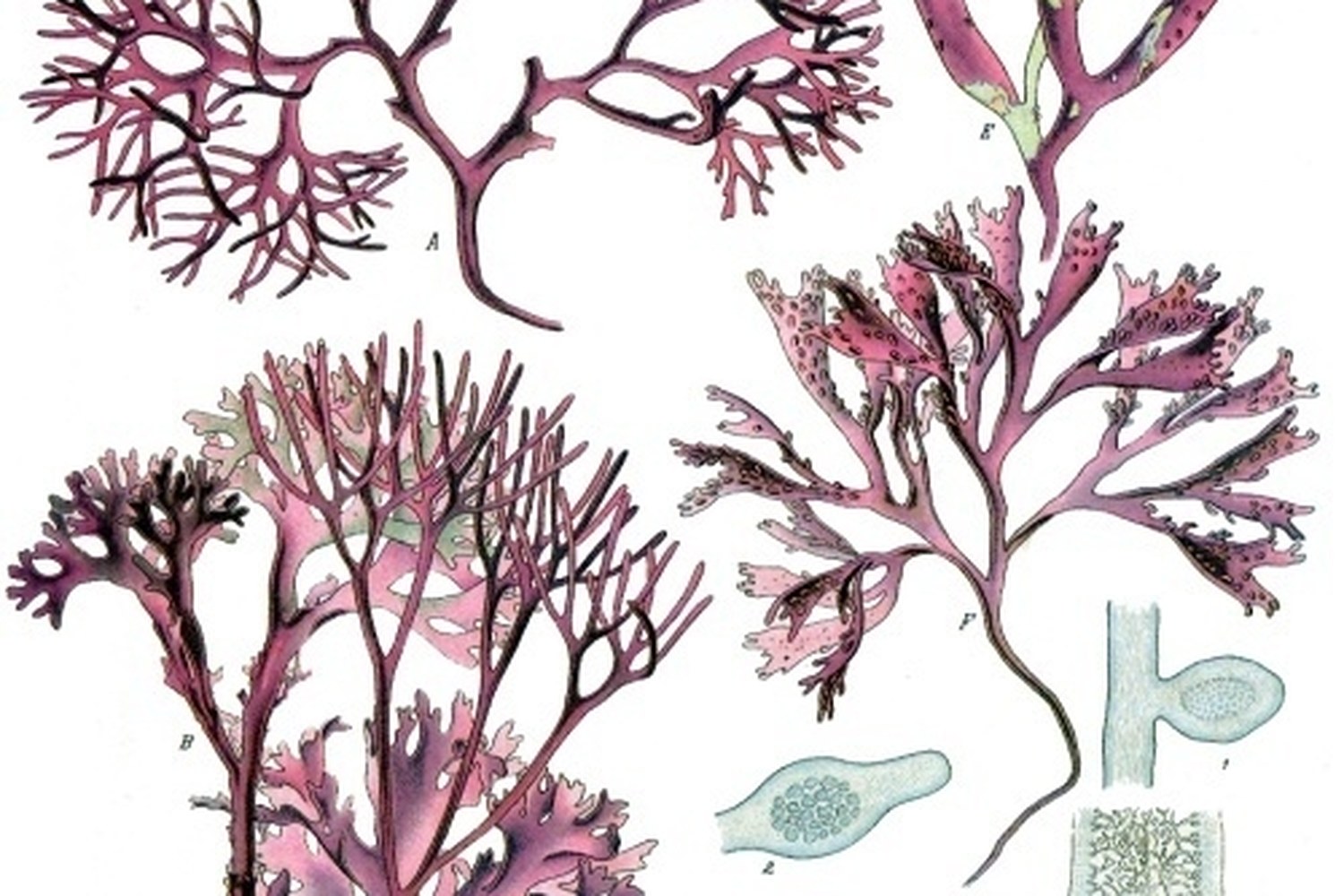
The work of recovery is, at bottom, the work of regrowing roots and protecting them while they form. Atlantic Irish sea moss is the structural backbone of this formula. It is dense in sulfated polysaccharides — galactose and anhydrogalactose chains, including galactose-6-sulfate — the same gel-forming, water-binding carbohydrates that make sea moss a hydrocolloid. In the root zone these act as a moisture buffer and a soil conditioner, holding water around stressed roots and feeding the mineral matrix the plant draws on while its feeder roots are too few to keep up. Sea moss carries a broad spectrum of minerals as building blocks, supporting the structural integrity of new tissue rather than force-feeding a flush of soft top growth the plant cannot yet support.
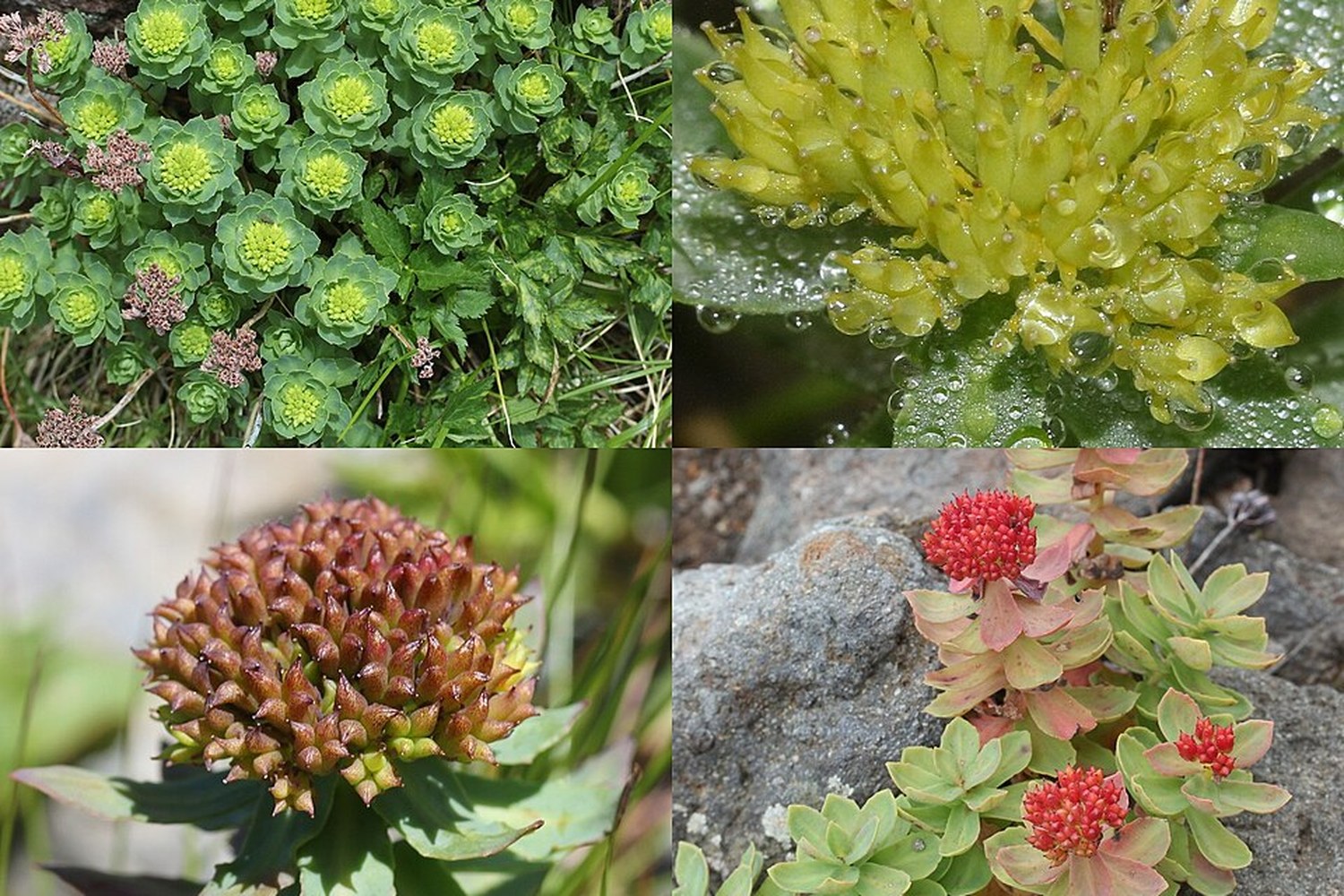
Reishi and rhodiola bring the resilience current. Reishi's ganoderic acids and its rich polysaccharide fraction are associated with antioxidant activity and microbial defense — relevant to a disturbed root system sitting in freshly opened soil. Rhodiola contributes salidroside and the rosavins, the adaptogenic compounds that define it; in measured screens salidroside touches oxidative-stress-related enzymes, the kind of cellular housekeeping a plant under transplant stress relies on to settle. Together they support the plant's capacity to hold steady through the disturbance instead of spiraling into a long sulk.
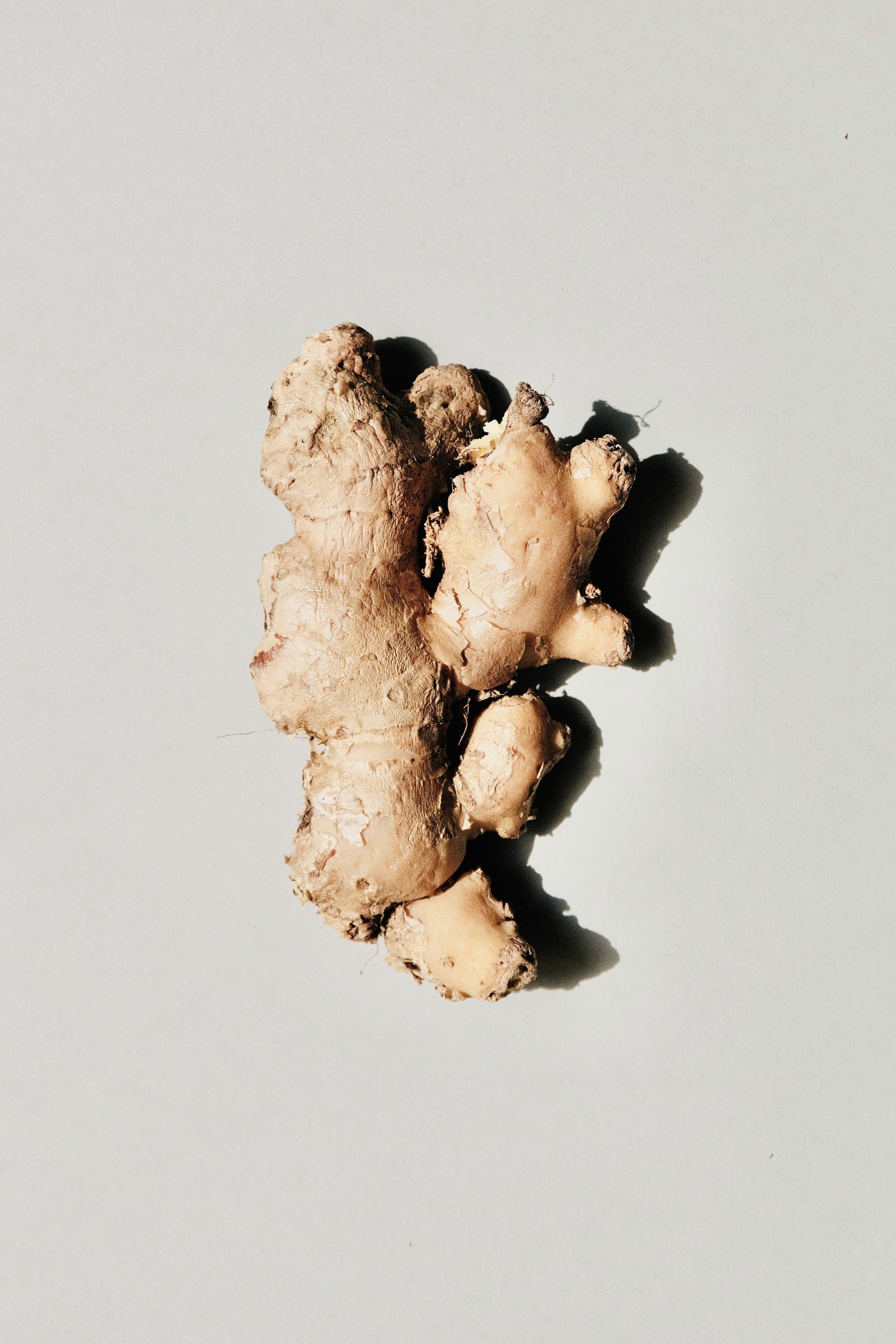
Ginger and licorice complete the picture at the soil interface. Ginger's gingerols are warming, circulation-friendly aromatics with a warming, circulation-friendly character — useful around the damp, vulnerable root zone of a fresh transplant as it settles in. Licorice contributes glycyrrhizin and 18-beta-glycyrrhetinic acid, surfactant-like saponins that help a dilute drench wet and spread evenly and that help a dilute drench spread evenly. None of this treats a plant disease — it is structure and function: a feed that supports moisture balance, tissue integrity, and a clean, resilient root zone while the plant does the regrowing itself.
The molecules, measured
A formula is a community of compounds. Below are active molecules from the herbs in this blend and the proteins each is measured to engage — the precise points where the plants meet biology. So you see not just that it works, but how.
Ganoderma lucidum
Ganoderic acid A
PubChem ↗Measured to act on
An enzyme that locally regenerates active cortisol, shaping how tissues respond to the body's stress hormone.
An enzyme that quiets cortisol inside kidney and salt-handling tissues, helping govern fluid and mineral balance.
An enzyme that converts glucose into sorbitol, part of how cells handle sugar.
Ganoderic acid B
PubChem ↗Measured to act on
The enzyme that breaks down acetylcholine, resetting nerve and muscle signals between pulses.
A blood enzyme that breaks down acetylcholine and helps clear certain compounds from circulation.
An enzyme that converts glucose into sorbitol, part of how cells handle sugar.
Rhodiola rosea
Salidroside
PubChem ↗Measured in the lab: binds tightly to Amine oxidase [flavin-containing] B · IC50 810 nM
Measured to act on
An enzyme that breaks down messenger chemicals like dopamine in the nervous system.
An enzyme that makes prostaglandins for everyday upkeep like protecting the stomach lining.
An enzyme that cuts RNA when it is paired with DNA, part of normal genetic housekeeping.
Tyrosol (p-Tyrosol)
PubChem ↗Measured in the lab: binds tightly to Beta-carbonic anhydrase 1 · Ki 850 nM
Measured to act on
An enzyme that balances carbon dioxide and acidity, abundant in red blood cells.
A fast enzyme that balances carbon dioxide and acidity throughout the body.
A receptor that receives growth signals guiding cell movement, repair, and renewal.
Zingiber officinale
6-Gingerol
PubChem ↗Measured in the lab: binds to Transient receptor potential cation channel subfamily V member 1 · EC50 3.3 µM
Measured to act on
A major liver enzyme that processes a wide range of compounds the body takes in.
A repair enzyme that resolves certain DNA damage so the strand can be restored.
A liver enzyme that helps break down and process many compounds and natural substances.
6-Shogaol
PubChem ↗Measured in the lab: binds to Cytochrome P450 1A2 · IC50 2.5 µM
Measured to act on
A major liver enzyme that processes a wide range of compounds the body takes in.
A liver enzyme that processes many compounds, including some the body forms naturally.
A nerve-ending sensor that responds to heat and to the pungency of chili pepper compounds.
Chondrus crispus
Taurine
PubChem ↗Measured to act on
A transporter that carries amino acids into cells alongside acidity-balancing protons.
D-Mannose (genus-associated sugar; included only to carry its verified ChEMBL target, not asserted as the headline Chondrus carrageenan unit)
PubChem ↗Measured to act on
A bacterial surface protein that grips sugar molecules to attach to host surfaces.
Glycyrrhiza glabra
18beta-Glycyrrhetinic acid (enoxolone)
PubChem ↗Measured in the lab: binds very tightly to 11-beta-hydroxysteroid dehydrogenase type 2 · IC50 1.2 nM
Measured to act on
An enzyme in tissues like fat and liver that activates the stress hormone cortisol.
A kidney enzyme that switches off cortisol, helping the body manage salt and fluid balance.
A signaling enzyme involved in skin cell growth and how cells respond to their environment.
Liquiritigenin
PubChem ↗Measured in the lab: binds very tightly to Estrogen receptor beta · EC50 37 nM
Measured to act on
A receptor that reads the hormone estrogen, helping govern reproductive and other tissues.
The building-block protein of the internal scaffolding that gives cells shape and moves their parts.
Cited science · not claims
Everything we publish about these plants traces to a primary source — the compounds to PubChem, ChEMBL, and BindingDB, the traditional uses to named, dated herbals. We describe what a plant is and what it is understood to nourish — the body’s own systems, structure and function only. We do not claim it treats, cures, or prevents any disease, and nothing here is a substitute for professional care. See our method & sources →
These statements have not been evaluated by the Food and Drug Administration. Not intended to diagnose, treat, cure, or prevent any disease.
Why these herbs together
The shared mechanism
More than one botanical in this blend is measured to engage the same molecular targets. We share the convergent chemistry — characterized and cited, never a claim.
Reishi · Licorice
Reishi · Ginger
Reishi · Licorice
Reishi · Licorice
Ginger · Licorice
Rhodiola · Ginger
Each convergence is a gene whose protein two or more of this formula’s herbs are measured to engage (PubChem BioAssay & ChEMBL). It describes characterized molecular activity and the protein’s normal role — structure and function only, never a claim to treat, cure, or prevent any disease.
In practice
Who it’s for, and how to use it
Who it’s for
For any gardener, grower, or houseplant keeper in the act of moving plants — transplanting seedlings into the bed, potting up or repotting, dividing perennials, taking and settling cuttings, or nursing a plant that has been knocked about, root-disturbed, or stressed by handling. Reach for it at the moment of the move and through the recovery window that follows, on anything from a propagation tray to a mature specimen in a large pot.
How to use it
Dilute 1/8 to 1/4 teaspoon per gallon of water. Use the lighter rate as a foliar feed, misting the leaves, or the fuller rate as a soil drench poured into the root zone. Apply about once a month, or on every other feeding, beginning at the time of transplant and continuing through the recovery window. As with any dilute botanical feed, start at the lighter rate on tender seedlings and young plants and build up as they establish.
Measure · Dilute 1/8 to 1/4 teaspoon per gallon of water. Foliar feed at the lighter rate, or soil drench at the fuller rate, about once a month or every other feeding.
What’s inside
Inside: a combination of reishi, rhodiola, ginger, Atlantic Irish sea moss, and licorice — convergent botanicals chosen for the way they meet at the root zone of a freshly moved plant. Sea moss for moisture and minerals, reishi and rhodiola for resilience, ginger and licorice for a clean, well-wetted soil interface. 1 oz / 12 g.
For agricultural and horticultural use. Supports plant growth, vigor, and resilience — not a claim of any effect on human or animal health.
Pairs well with
Formulas that share Recovery's botanicals
Built from overlapping herbs, these reinforce Recovery along the same lines — the shared-botanical kinship our genome engine maps.